
From Music Student to Young Artist: When Does a Violinist Find Their Own Voice?
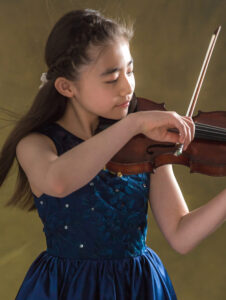 Every violinist begins somewhere. First come the scales, the practice routines, and the challenge of playing the right notes at the right time. With patience and dedication, technique improves, difficult passages become more manageable, and music that once seemed impossible starts to feel natural.
But at some point, another question emerges: When does a violinist stop simply playing music and begin expressing something of their own?
The transition from music student to young artist is not defined by age, years of experience, or technical ability alone. It happens gradually, as musicians learn to understand the music they perform, make thoughtful artistic choices, and communicate emotions through their instrument. For young violinists, this journey can be one of the most rewarding parts of musical education.
1. Technique Is the Beginning, Not the Destination
Strong technique gives violinists the freedom to express themselves.
Bowing control, intonation, rhythm, posture, and finger placement all contribute to a reliable performance. These fundamentals allow musicians to approach challenging repertoire with greater confidence. However, technical accuracy is only one part of musical interpretation.
Two violinists can perform the same composition with excellent technique and still create very different musical experiences. One may emphasize warmth and lyrical phrasing, while another highlights contrast, intensity, or rhythmic energy. Neither interpretation necessarily has to be better than the other.
The real question is not only whether a violinist can play the notes, but what they want the listener to hear and feel.
As technique becomes more secure, young musicians gain more freedom to explore that question.
2. Why Musical Expression Takes Time
A young violinist may be able to perform a difficult concerto while still learning how to communicate its deeper musical meaning. This is completely normal.
Artistic maturity develops through experience, listening, experimentation, and reflection. As students encounter new repertoire and musical styles, they begin to recognize the expressive possibilities within each piece.
Their interpretation may also change over time. A composition performed at age 12 may feel completely different at age 17 because the musician has gained new experiences, musical knowledge, and emotional understanding. There is no single moment when a violinist officially becomes an artist.
Instead, the transition often appears in small changes: a more intentional phrase, a thoughtful pause, a distinctive tone, or the confidence to make an interpretive decision.
Finding your musical voice is a process, not a deadline.
3. Can Competitions Help Violinists Find Their Artistic Voice?
Violin competitions can provide valuable opportunities for young musicians to challenge themselves, prepare demanding repertoire, and perform for new audiences.
Preparing for a competition encourages students to examine their musical choices closely. Every phrase, dynamic, transition, and technical passage becomes an opportunity to refine their interpretation. Performing under pressure can also teach students how to communicate their ideas when the stakes feel high. However, artistic growth should not be measured by competition results alone.
A prize can be an important achievement, but so can performing with greater confidence, discovering a new interpretation, or learning to recover from a difficult moment on stage. When approached as part of a broader musical journey, competitions can encourage young violinists to develop both their skills and their artistic identity.
The most valuable question after a performance may not be, “Did I win?” but rather, “What did I learn, and how can I express myself more clearly next time?”
4. How Young Violinists Can Start Developing Their Own Voice
Students do not need to wait until they reach an advanced level to begin exploring musical expression. Here are five practical ways to start:
Listen With Intention
Explore multiple recordings of the same piece. Notice differences in tempo, phrasing, articulation, vibrato, and dynamics. Consider which choices resonate with you and why.
Record Your Practice
Listening to a recording of your own performance can reveal details that are easy to miss while playing. Pay attention to whether your interpretation communicates the character you intended.
Experiment With Interpretation
With your teacher’s guidance, try different approaches to phrasing, bow distribution, dynamics, or vibrato. Compare the results and decide which choices best support the music.
Study the Composer and the Score
Understanding a composition’s historical context, structure, and musical language can help you make more informed interpretive decisions.
Perform for Others
Recitals, chamber music, masterclasses, and competitions allow students to experience how their musical ideas translate to an audience. Each performance offers an opportunity to learn and grow.
The objective is not to sound different simply for the sake of being different. It is to develop an interpretation that is thoughtful, musically grounded, and increasingly personal.
5. What Does It Mean to Become a Young Artist?
A young artist is not necessarily the violinist who plays the fastest, performs the most difficult repertoire, or wins the most awards.
A young artist is someone who begins to approach music with curiosity, intention, and a desire to communicate.
They understand that technique supports expression, that interpretation requires thought, and that musical growth continues long after a piece has been mastered.
Most importantly, they begin to recognize that music is more than a series of notes to reproduce. It is a way to communicate ideas, emotions, and perspectives that words sometimes cannot express.
Every violinist develops at a different pace. Some begin exploring their artistic identity early, while others discover it through years of study and performance. There is no need to rush the process. The goal is to keep learning, listening, questioning, and creating.
Discover the Next Step in Your Musical Journey With the Chicago Violin Competition
For young violinists ready to challenge themselves and share their musical interpretations, performance opportunities can be an important part of artistic development.
Top International Violin Competition Online – Chicago Violin Competition is an international violin competition held online via video submission, providing promising young artists ages 7-28 the opportunity to showcase their talents on the world’s stage. CVC is a unique violin competition, setting a new standard in the musical community as an excellent opportunity for both talented young violinists and seasoned performers to deepen their abilities. Both Young Artist and Senior Artist divisions are assessed by world-renowned Judges.
Ready to Take Your Violin Journey Further?
Explore opportunities to challenge yourself, share your interpretation, and continue growing as a young violinist.
Learn more about Chicago Violin Competition 2028 and explore future competition opportunities. Chicago Violin Competition 2028